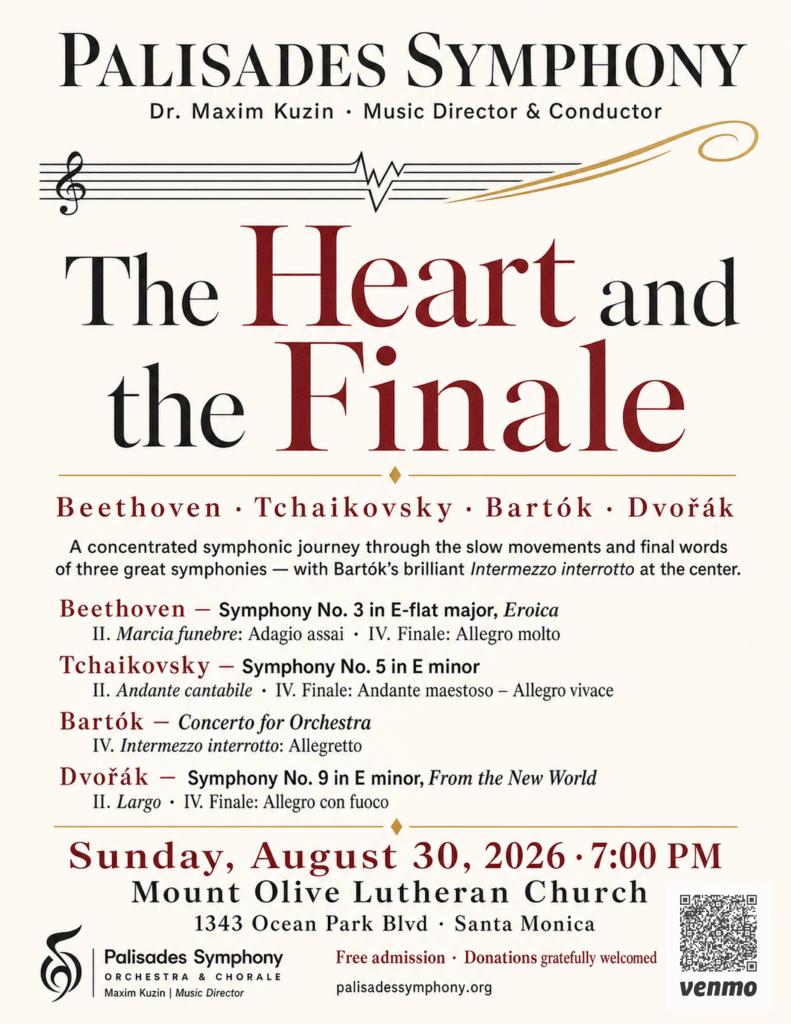
August 30, 2026 | 7 PM Mount Olive Lutheran Church | 1343 Ocean Park Blvd, Santa Monica, CA, 90405
Most concerts give you complete symphonies. This one asks a different question: what happens when we hear the heart of a symphony — the movement where it speaks most privately — and then its finale, where it fights, dances, grieves, or is transformed?
Three great symphonies each contain a slow movement that feels like an emotional confession, followed by a finale that answers it. On August 30, we place those movements side by side:
• Beethoven’s Eroica — the solemn Marcia funebre, one of the most profound funeral marches in all music, and the triumphant finale Beethoven built from a theme he loved enough to use four times across his career.
• Tchaikovsky’s Fifth — the Andante cantabile, with its famous, heart-on-the-sleeve horn solo, and the blazing finale that turns the symphony’s brooding “fate” motto from darkness into victory — or does it?
• Dvořák’s New World — the beloved Largo, whose English-horn melody is so song-like it later became the spiritual “Goin’ Home,” and a finale that gathers the whole symphony into one final surge.
At the center stands Bartók’s Intermezzo interrotto — the “interrupted intermezzo” from his Concerto for Orchestra. It is a brilliant, witty interruption: a tender melody that keeps getting cut off by a swaggering, satirical tune, full of orchestral color and mischief.
For me, this is a symphonic journey through grief and courage, longing and arrival, with Bartók breaking the frame in the middle. I hope you’ll join us.
Admission is free, and every guest and every donation helps our community of music lovers grow — and helps us deliver memorable, free classical-music concerts to you.